
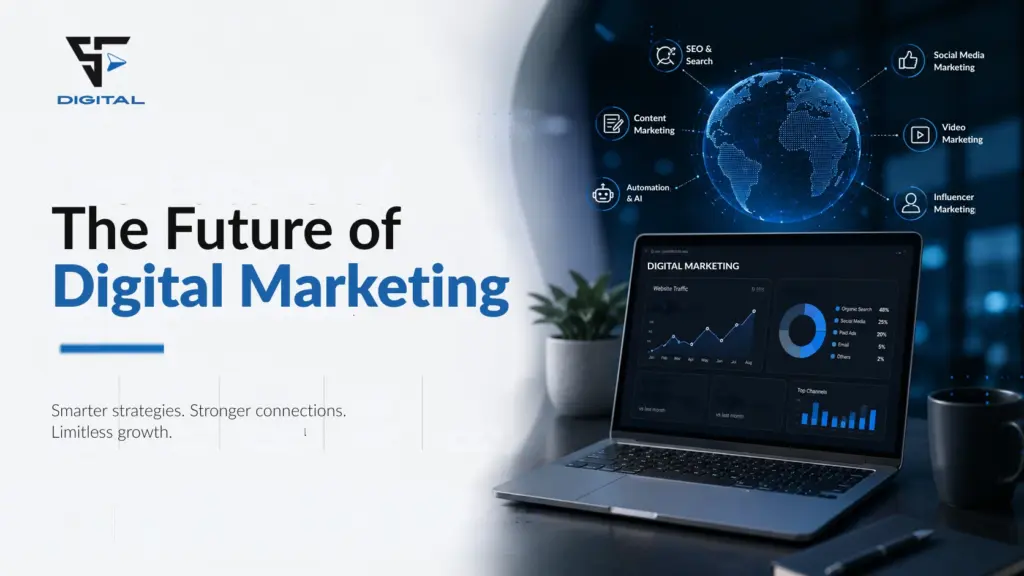
There was a time when digital marketing meant putting up a website, running a few banner ads, and sending the occasional newsletter. That world is gone. Today, marketing is powered by algorithms, driven by data, and shaped by platforms that change their rules every few months. Furthermore, the Future of Digital Marketing is expected to be much more dramatic than the last chapter.
For business owners, marketers, and freelancers alike, the question isn’t whether digital marketing will keep evolving — it’s whether they’ll be ready for the Future of Digital Marketing. This post takes a close look at the forces reshaping the industry and what they mean for anyone building a brand online.
The Shift From Interruption to Invitation
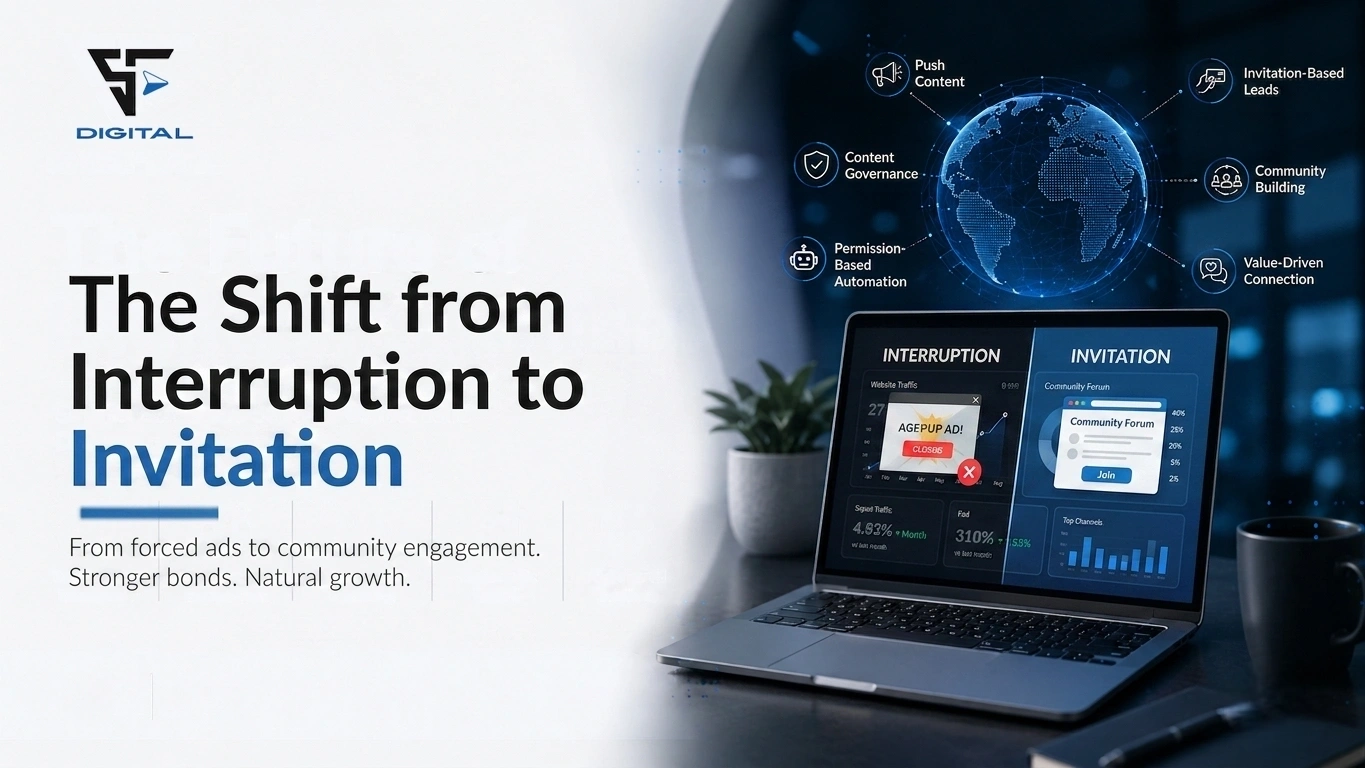
Traditional advertising was built on interruption — pop-ups, cold emails, banner ads that flashed for attention whether you wanted them or not. That model is fading fast. Audiences today are more selective, more skeptical, and far better at tuning out anything that feels like a sales pitch.
The future belongs to marketing that invites engagement rather than forcing it. That means:
- Content that addresses a genuine issue without requesting anything in return
- Brand experiences that feel more like a conversation than a broadcast
- Marketing that earns attention through relevance, not repetition
Businesses that continue relying purely on interruption-based tactics will find their returns shrinking. Those that shift toward value-first, invitation-based marketing will build audiences that stick around.
Artificial Intelligence as a Strategic and Creative Collaborator
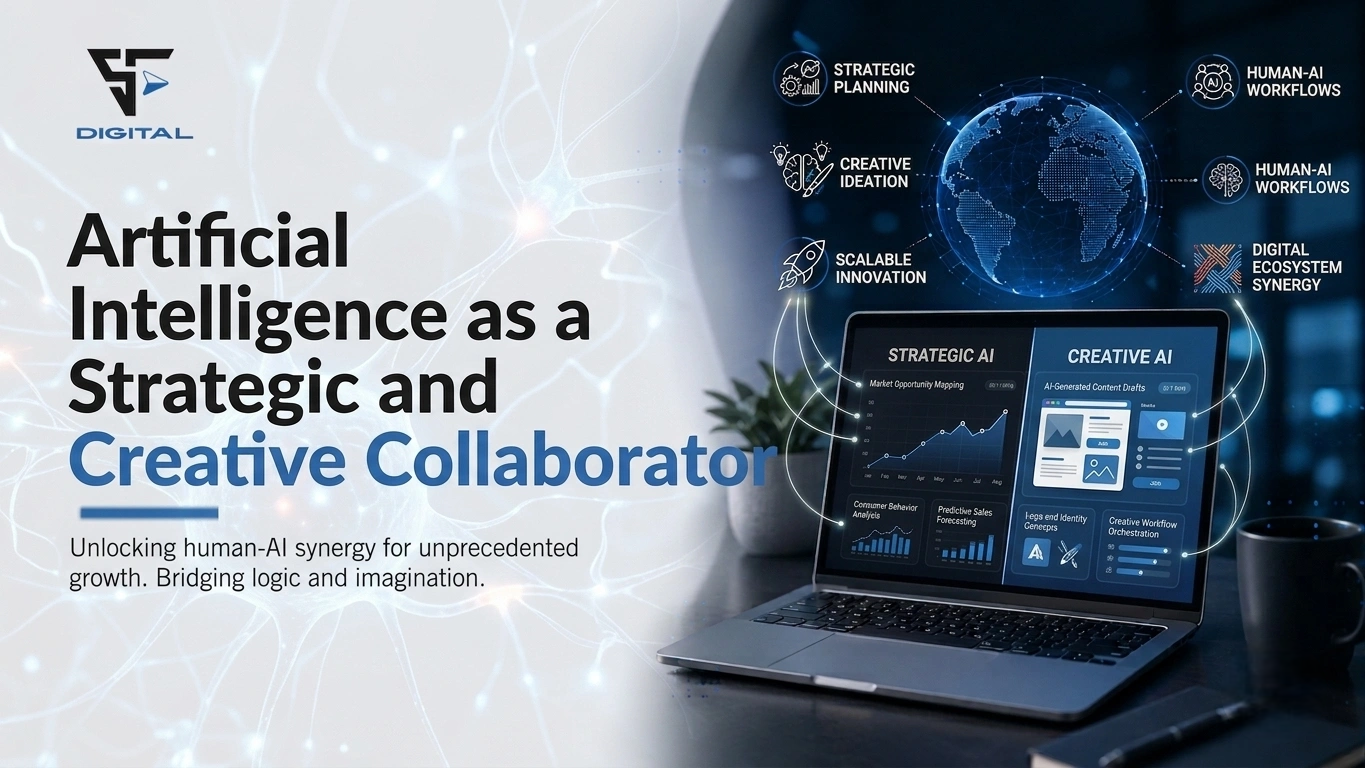
AI has moved far beyond chatbots and spellcheck. It’s now capable of writing ad copy, generating images, analyzing customer sentiment, and predicting which leads are most likely to convert. Over the coming years, AI will become deeply woven into nearly every marketing function.
Some of the biggest shifts to expect:
- Campaigns that adjust themselves in real time based on performance data
- AI-assisted content creation that speeds up production without sacrificing quality
- Predictive tools that flag customer churn before it happens
- Smarter ad targeting that reduces wasted spend
The marketers who get the most value from AI won’t be the ones who let it do everything — they’ll be the ones who use it to remove repetitive work so they can focus on strategy, storytelling, and building genuine brand personality.Even while AI may produce a hundred different headline variants, a human is still required to determine which one truly sounds like the brand.
Hyper-Personalization Becomes the Standard, Not the Exception
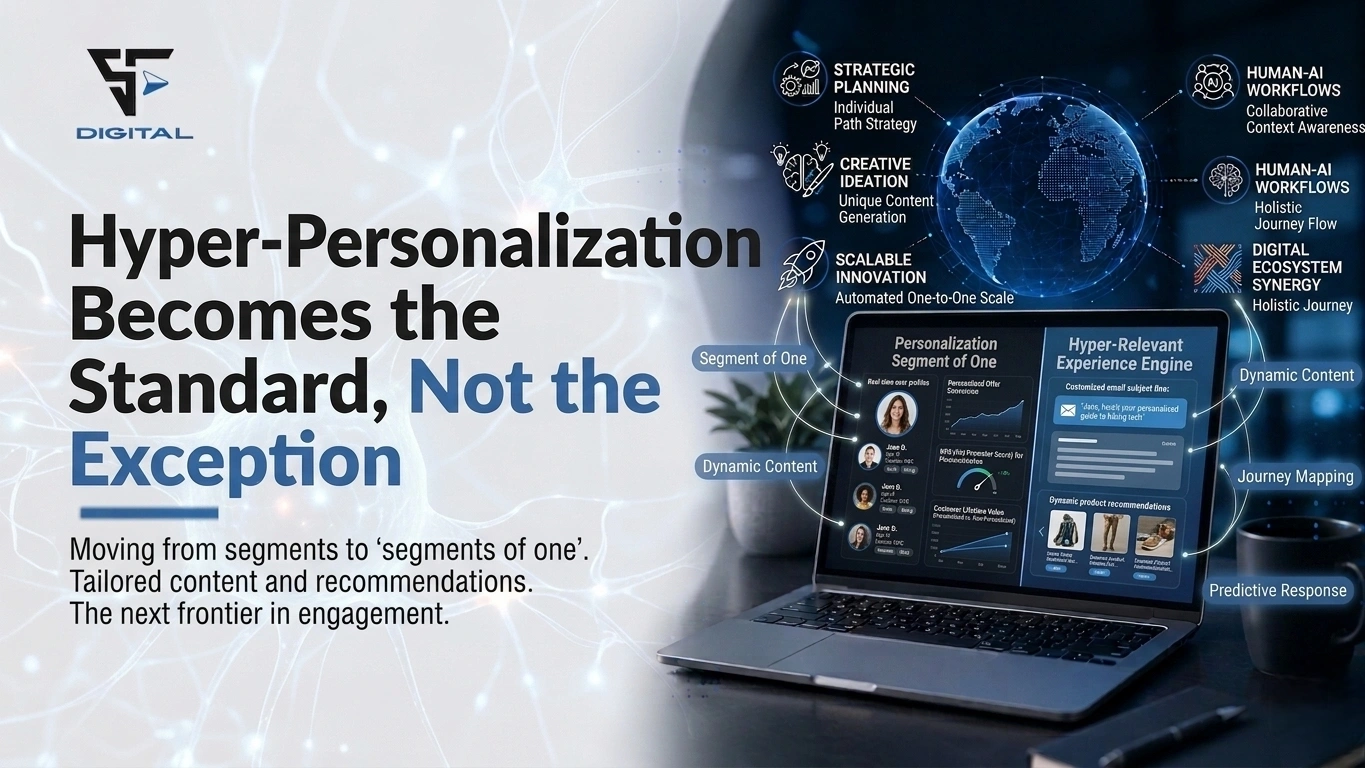
A few years ago, personalization meant addressing someone by their first name in an email. That bar has risen dramatically. Customers now expect brands to understand their preferences, anticipate their needs, and deliver experiences that feel individually crafted.
This will soon appear as :
- Websites that reshape their content based on a visitor’s browsing history
- Product recommendations that adapt in real time, not just based on past purchases
- Advertising that shifts its message depending on where someone is in their buyer journey
- Email marketing triggered by specific behaviors rather than generic schedules
Achieving this level of personalization requires strong data foundations. Brands that invest early in collecting first-party data — through newsletters, loyalty programs, and direct customer interactions — will be far better positioned than those still relying on outdated, one-size-fits-all campaigns.
Life After Third-Party Cookies
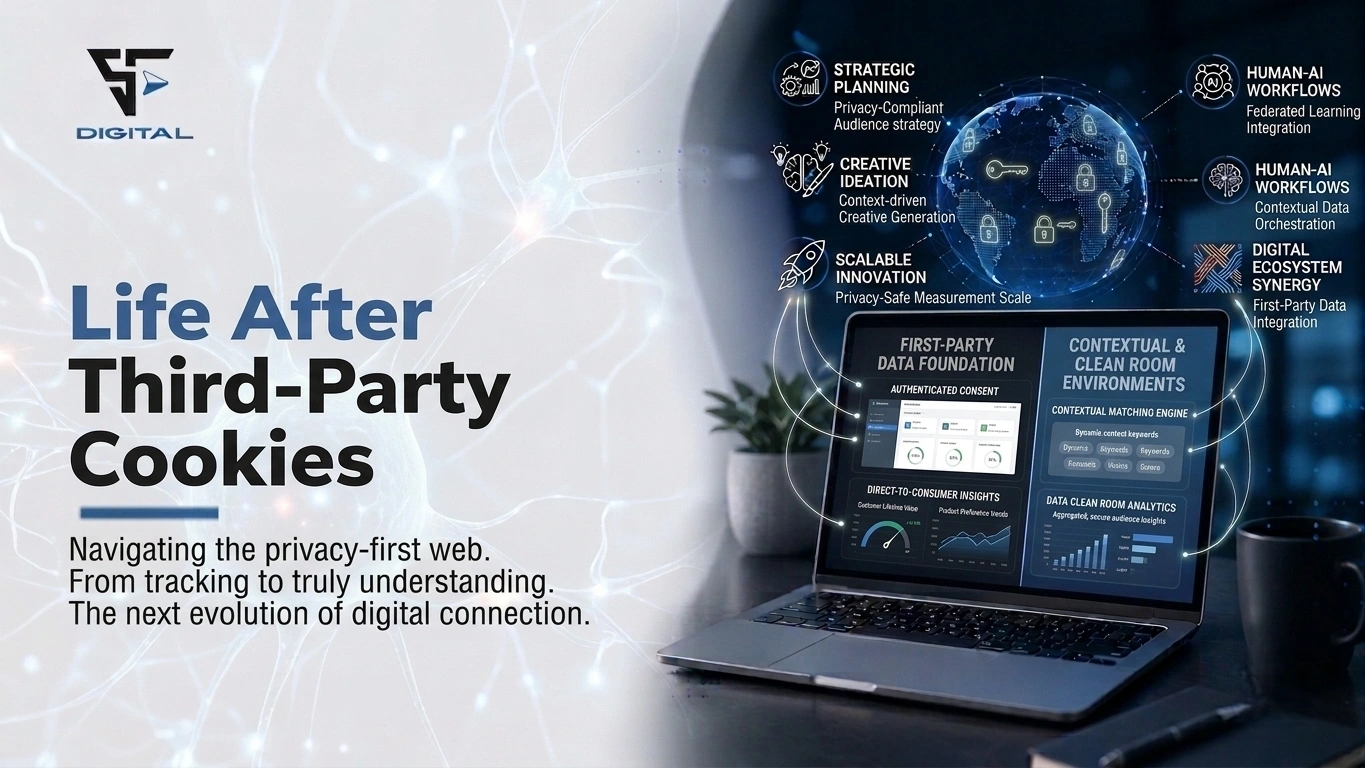
The slow disappearance of third-party cookies has forced the entire industry to rethink how it tracks and targets customers. Privacy regulations and browser-level restrictions mean marketers can no longer rely on quietly following users across the web — a shift that’s reshaping the Future of Digital Marketing at its core.
This shift is pushing brands toward more direct, consent-based data strategies, including:
- Building owned audiences through email and SMS lists
- Creating branded communities where customers willingly share preferences
- Using zero-party data — information customers hand over voluntarily, like quiz answers or preference settings
- Strengthening CRM systems to make full use of every existing customer touchpoint
This isn’t just a technical adjustment; it’s a trust-building opportunity central to the Future of Digital Marketing. Brands that are transparent about what data they collect and why will earn stronger loyalty than those trying to quietly work around the new restrictions. Ultimately, this move toward consent-based, owned data is one of the clearest signs of where the Future of Digital Marketing is heading.
Video content is the new standard, not a fad.
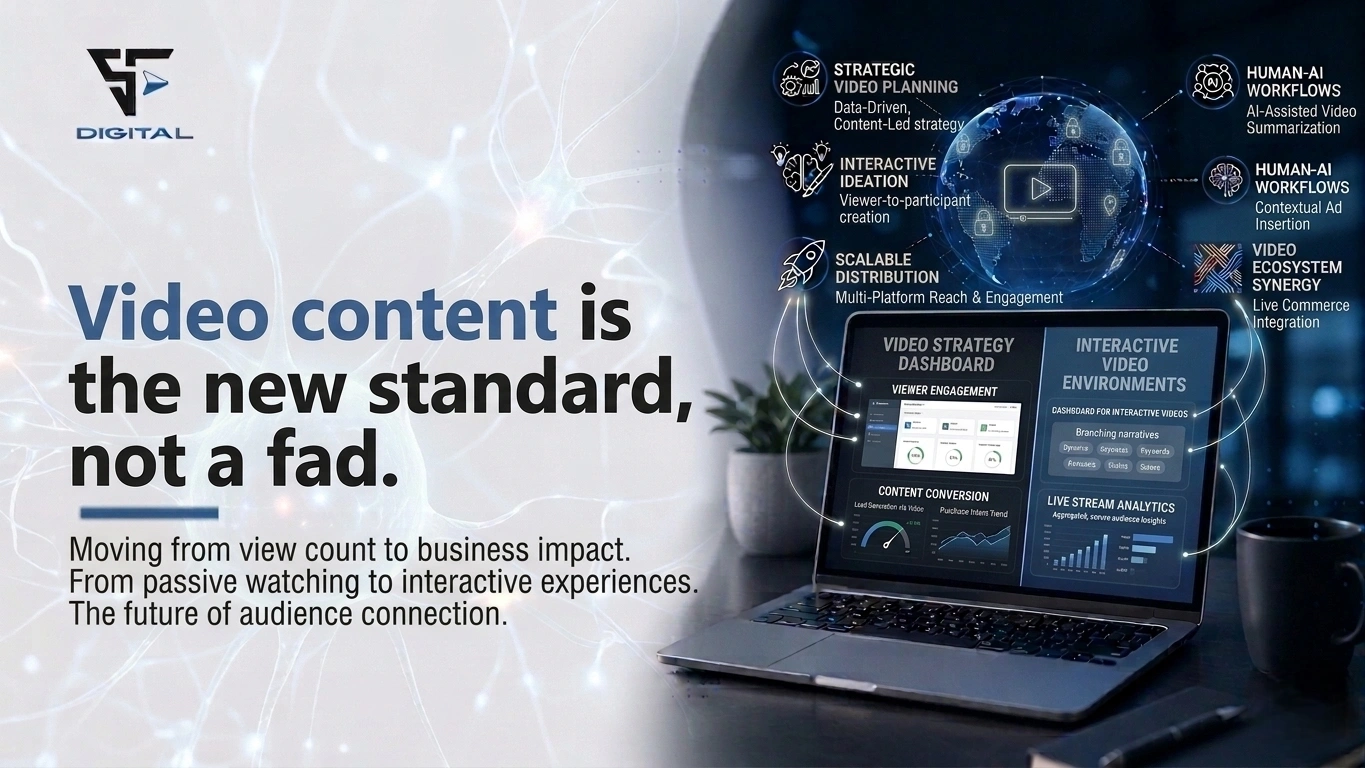
Short-form video has fundamentally changed how people discover brands, products, and ideas. What started as an entertainment format has become one of the most effective tools for education, storytelling, and sales. This shift shows no sign of slowing down, and it’s shaping up to be one of the defining forces in the Future of Digital Marketing.
Looking forward, the most effective video strategies will lean into:
- Authenticity over high production value — raw, real content often outperforms polished ads
- Educational and behind-the-scenes content that builds credibility
- Shoppable video formats that let viewers purchase without leaving the platform
- Repurposing a single piece of long-form content into multiple short clips
Brands that treat video as a core part of their strategy — not an occasional experiment — will have a significant edge in capturing attention in an increasingly crowded feed. This is exactly why video deserves a central place in any conversation about the Future of Digital Marketing. Ultimately, brands that invest in video now will be far better positioned as the Future of Digital Marketing continues to prioritize speed, authenticity, and visual storytelling.
Voice Search and Conversational Interfaces
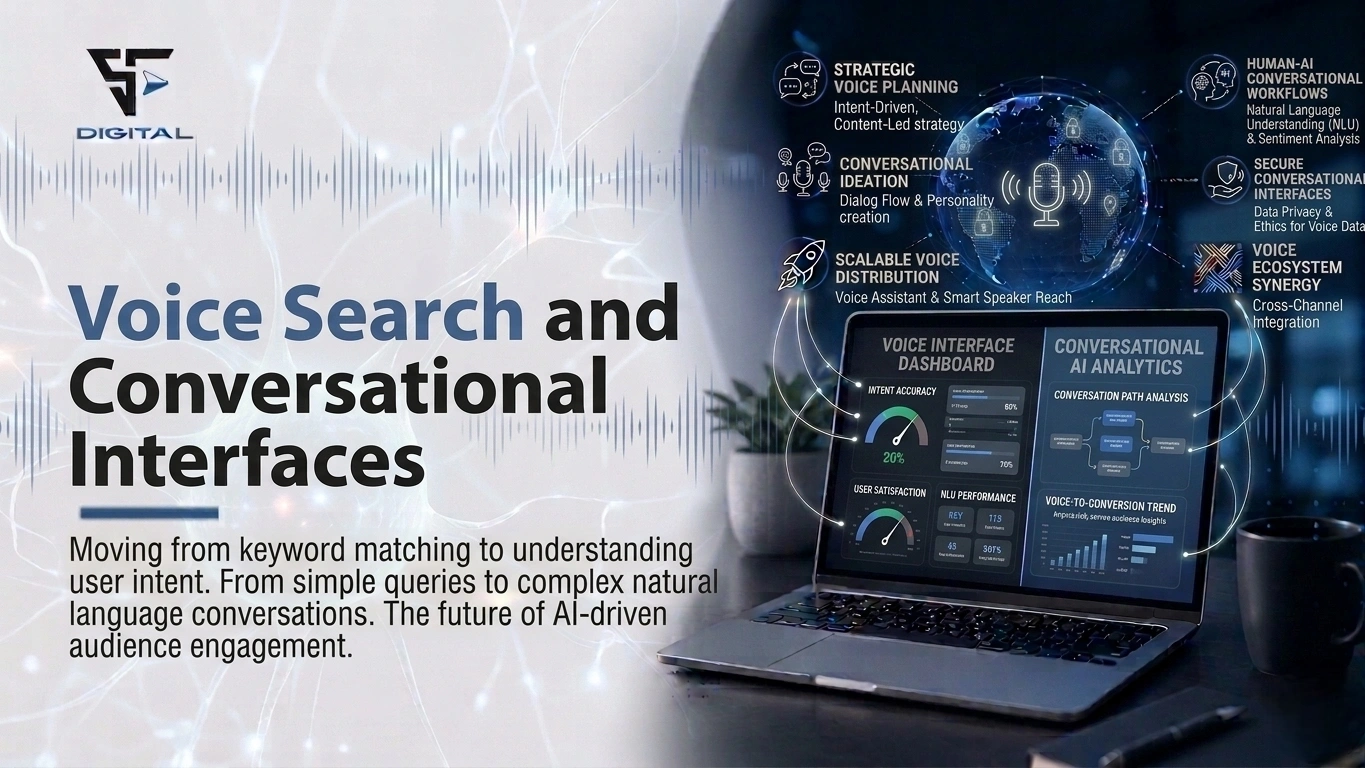
As voice assistants and conversational AI tools become more common, the way people search for information is changing. Voice queries tend to be longer, more natural, and phrased more like questions than traditional keyword searches — a shift that’s already shaping the Future of Digital Marketing.
To adapt, brands will need to:
- Write content in a more conversational, natural tone
- Focus on directly answering specific customer questions
- Structure pages with clear headings and FAQs that mirror how people actually speak
- Explore chatbots and voice-based tools for customer service and lead generation
Conversational marketing — powered by chatbots, messaging apps, and voice assistants — is steadily replacing static contact forms and slow-loading inquiry pages, giving customers faster, more natural ways to engage. This move toward natural, conversational interaction is one of the clearest markers of the Future of Digital Marketing. Ultimately, brands that embrace voice and conversational tools early will be better positioned as the Future of Digital Marketing continues to favor speed and ease over friction.
Social Commerce and the Shrinking Sales Funnel
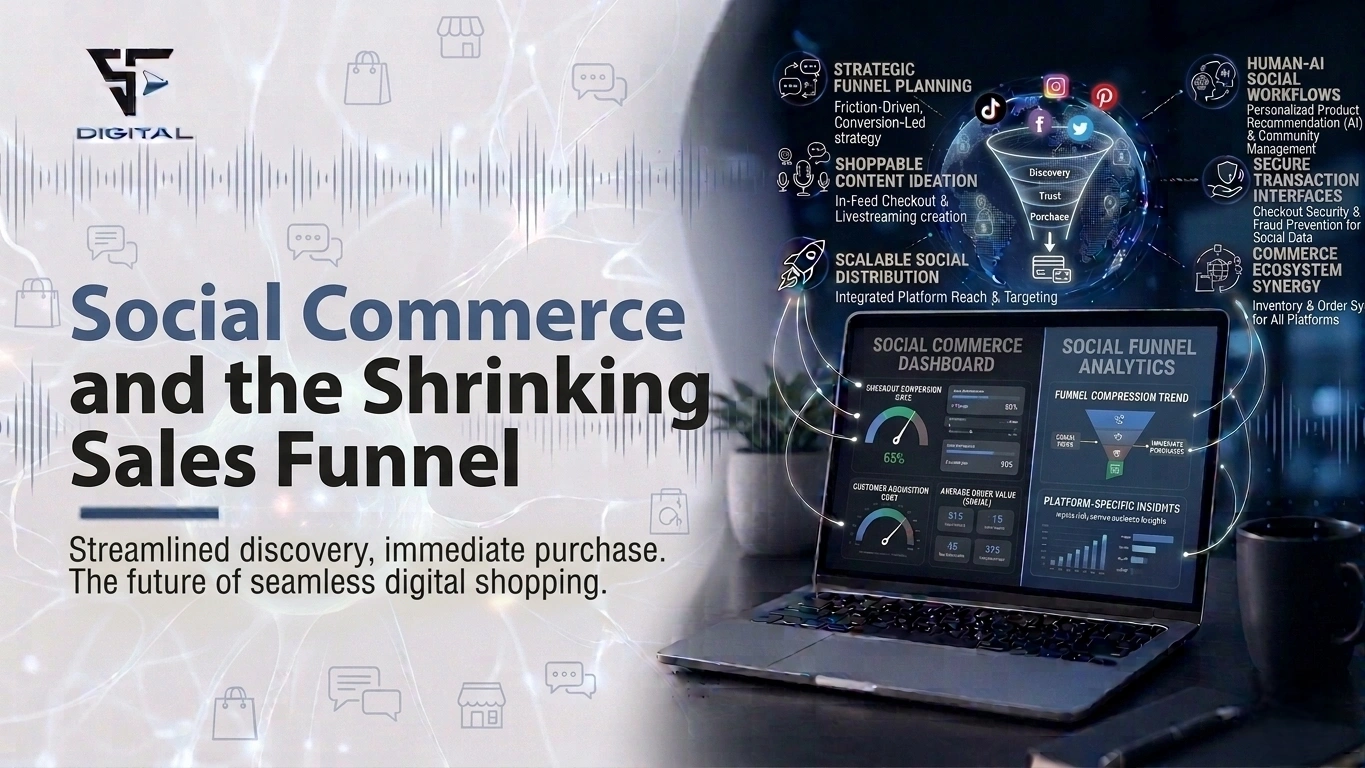
Social platforms have evolved from simple discovery tools into full shopping destinations. Users can now browse, research, and purchase a product without ever leaving the app. This blending of content and commerce is only going to accelerate — one of the clearest signals of where the Future of Digital Marketing is headed.
Expect to see:
- More seamless, in-app checkout experiences across major platforms
- Influencer collaborations shifting from one-off posts to long-term brand partnerships
- Livestream shopping events are starting to become a popular way to make purchases.
- Increased reliance on user-generated content to influence buying decisions
For businesses, this means rethinking the traditional sales funnel. The distance between discovering a product and buying it is shrinking fast, and marketing strategies need to be built for that compressed journey — a shift that will only grow more important in the Future of Digital Marketing.
Purpose-Driven Marketing Becomes Expected, Not Optional
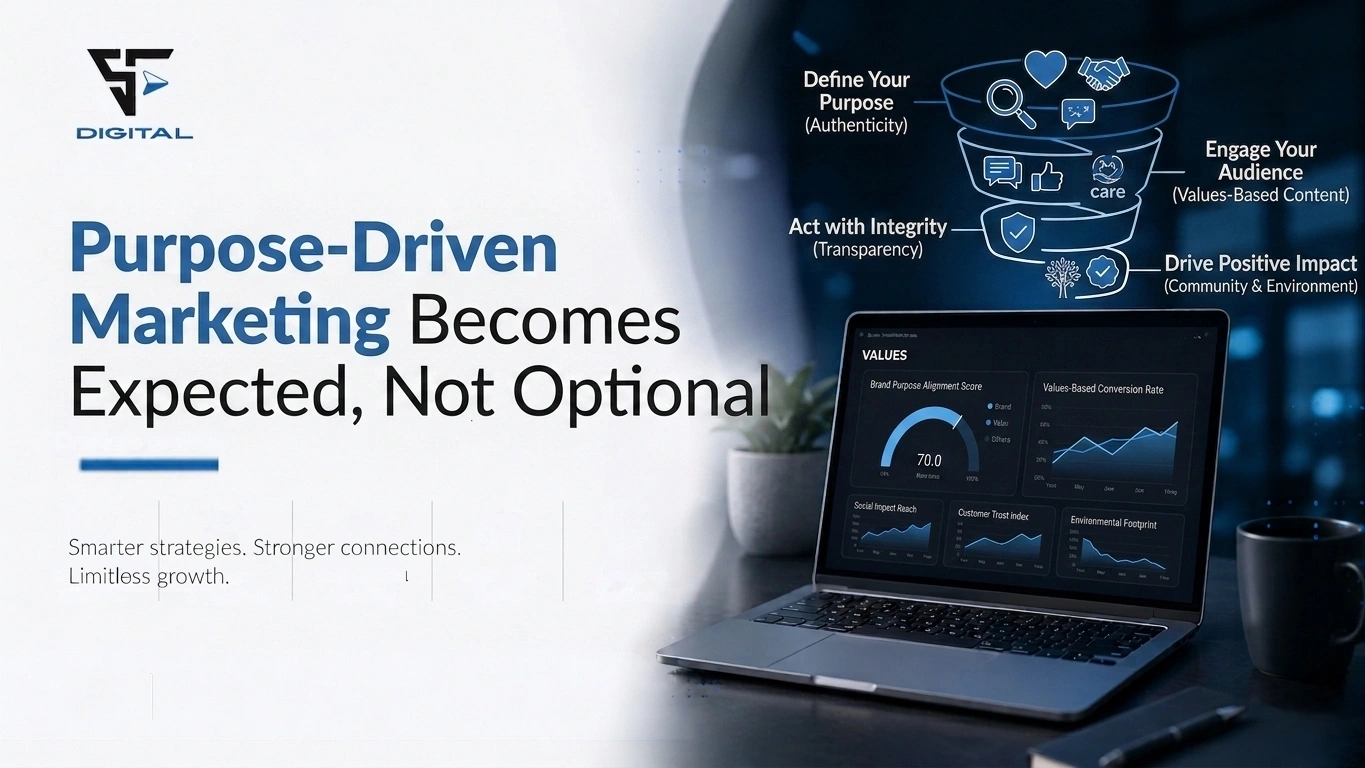
Customers are becoming more aware of what businesses truly stand for, particularly younger generations. Marketing focused solely on product features, without any sense of values or purpose, is losing its impact. The Future of Digital Marketing will increasingly require brands to show, not just tell, what they care about.
This doesn’t necessarily mean adopting a dramatic cause. It means being consistent and transparent about things like:
- Environmental responsibility and sustainable practices
- Ethical sourcing and fair treatment of workers
- Genuine community involvement
- Messaging that reflects real action, not performative statements
Audiences are quick to spot inauthenticity. Brands that try to fake purpose-driven marketing without backing it up often face more backlash than if they’d said nothing at all — a risk that will only grow as the Future of Digital Marketing rewards transparency over polish. The brands that succeed will be the ones whose actions speak louder than their campaigns, setting the tone for the Future of Digital Marketing as a space where authenticity becomes a genuine competitive advantage.
Marketing Automation That Feels More Human
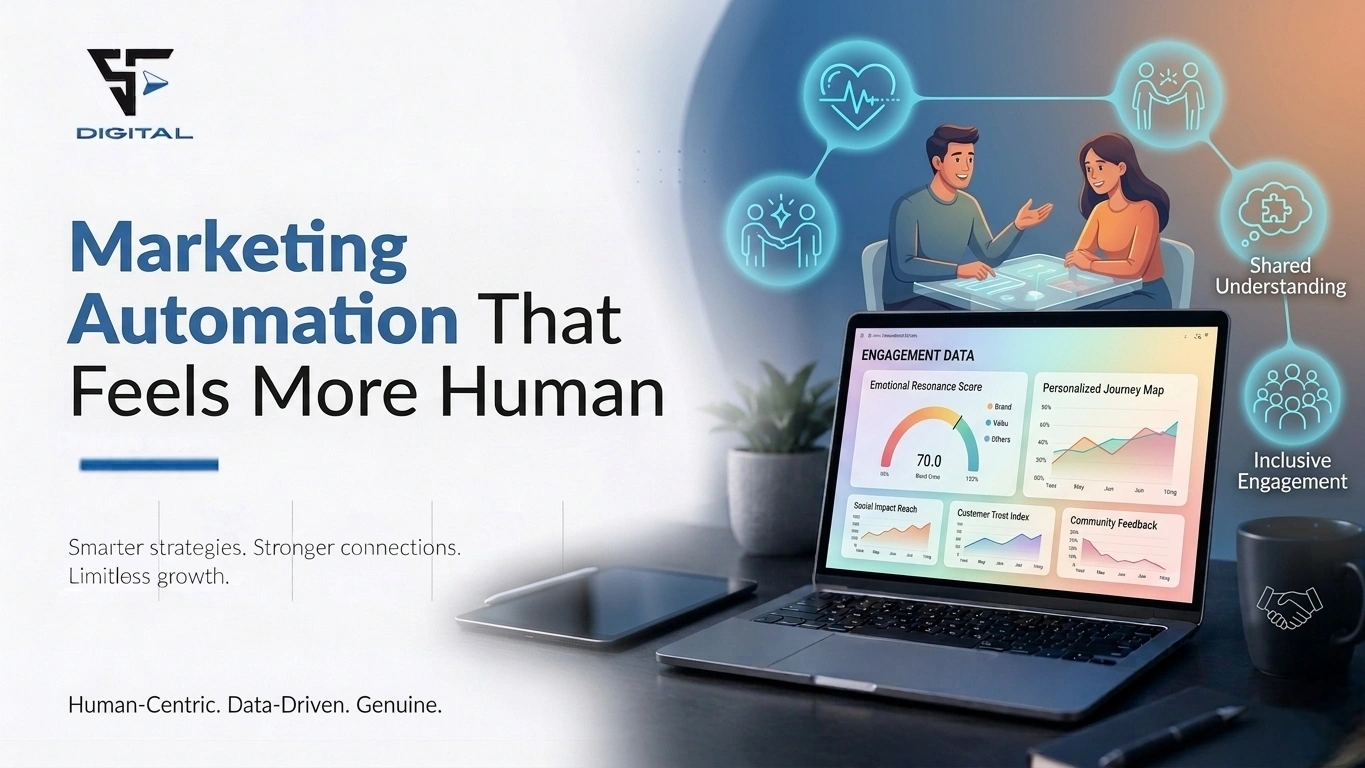
Automation already handles a huge share of email sequences, ad bidding, and audience segmentation. The next stage of automation isn’t about removing people from the process — it’s about combining machine efficiency with human creativity and empathy, a shift that will define much of the Future of Digital Marketing.
Future automation systems are likely to include:
- Real action-based messaging as opposed to theatrical remarks
- Smarter lead scoring that helps sales teams focus on the right prospects
- Tighter integration between marketing, sales, and customer service platforms
The goal is to free marketers from repetitive tasks so they can spend more time on strategy, creativity, and building real relationships with customers — not less time with customers, but more meaningful time. This balance between automation and authenticity is exactly what will shape the Future of Digital Marketing in the years ahead. Ultimately, brands that get this balance right will be the ones leading the Future of Digital Marketing, rather than simply reacting to it.
Data Privacy as a Brand Differentiator
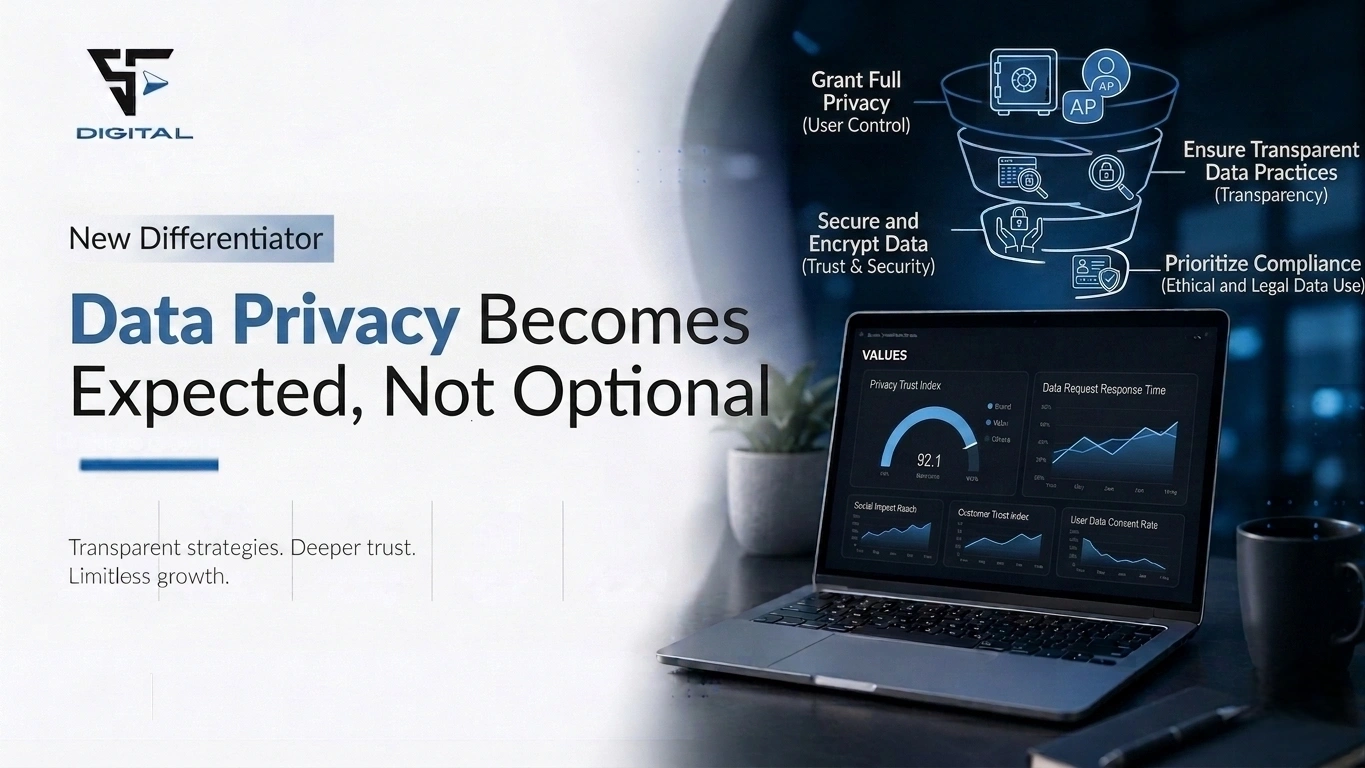
As data collection comes under closer scrutiny, customers are becoming far more selective about which brands they trust with their information. Moving forward, the Future of Digital Marketing will require a much stronger, more visible commitment to privacy and transparency.
This means clearly communicating:
- What data is being collected, and why?
- How that data is utilized, kept, and protected
- Giving customers meaningful control over their own preferences
Brands that treat privacy as a mere checkbox to tick will struggle to build lasting trust in the Future of Digital Marketing. Those that lead with real transparency will stand out in a marketplace where skepticism is growing. Ultimately, trust and transparency aren’t just nice-to-haves — they’re set to become defining pillars of the Future of Digital Marketing.
Adaptability Is the Real Competitive Advantage
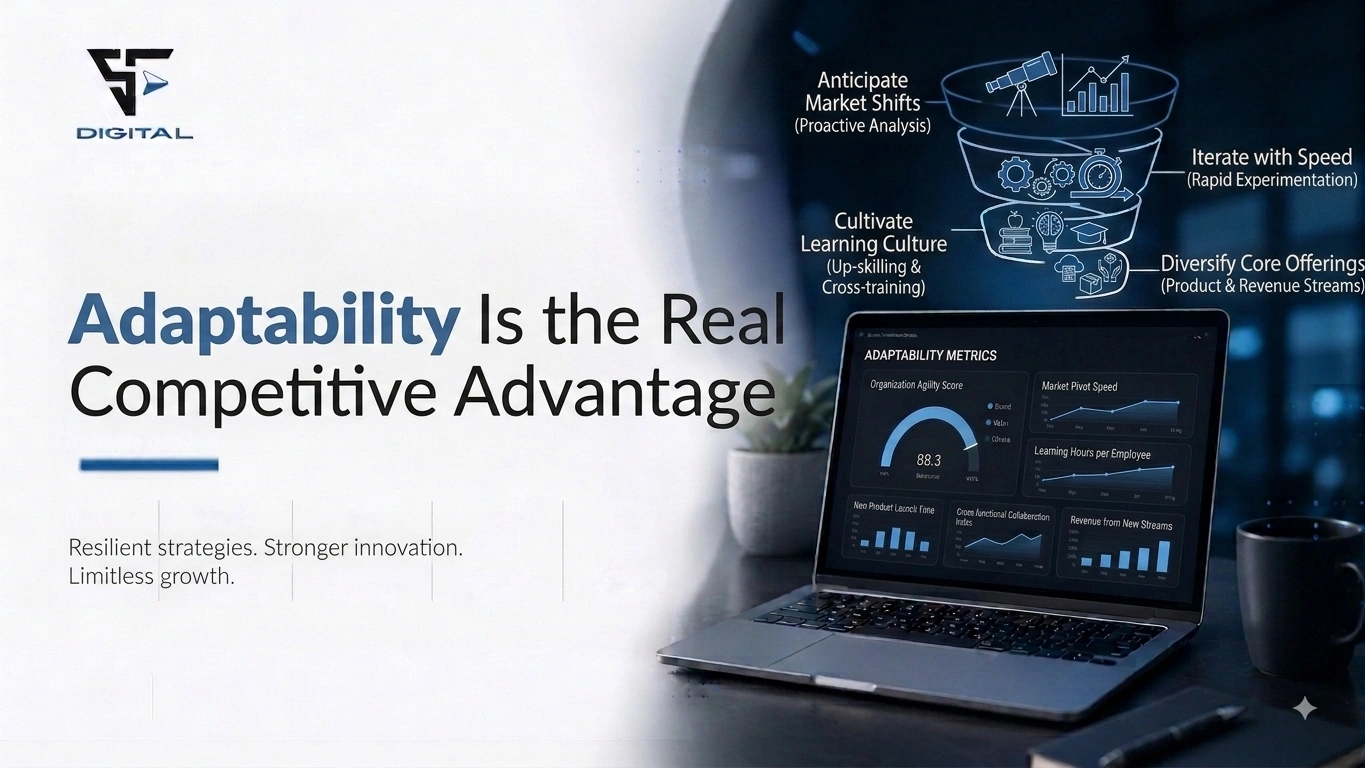
Perhaps the most important shift isn’t tied to any single platform or technology — it’s a mindset. The digital marketing landscape moves too quickly for any one strategy to stay effective indefinitely. The brands and marketers who thrive will be the ones committed to constant learning, testing, and adjusting.
This looks like:
- Staying genuinely curious about new tools and platforms as they emerge
- Regularly testing new formats and messages instead of repeating last year’s playbook
- Building flexible strategies that can pivot quickly when trends shift
- Investing in ongoing learning, whether through courses, research, or hands-on experimentation
Frequently Asked Questions
1. How is digital marketing changing in the next few years?
Marketing is moving away from interruption-based tactics like pop-ups and cold outreach, toward invitation-based approaches — content and experiences that earn attention through relevance rather than repetition. AI, hyper-personalization, video, and social commerce are the biggest forces driving this shift.
2. Will AI replace digital marketers?
No. AI is best used to handle repetitive work — like generating content variations or analyzing data — so marketers can focus on strategy, storytelling, and brand voice. The marketers who benefit most are the ones who use AI as a collaborator, not a replacement.
3. What does hyper-personalization mean for a small business or brand?
It means moving beyond just using someone’s first name in an email. Customers now expect websites, product suggestions, and ads to adapt based on their actual behavior and preferences. Building this requires solid first-party data — collected through newsletters, loyalty programs, and direct customer touchpoints.
4. How should brands handle marketing without third-party cookies?
By shifting to consent-based, owned data strategies — email and SMS lists, branded communities, zero-party data (info customers share voluntarily), and stronger CRM systems. Being transparent about data collection also builds more trust than trying to work around the new restrictions.
5. Is short-form video still worth investing in?
Yes — it’s considered a core strategy now, not a trend to test occasionally. Authentic, lower-production content tends to outperform polished ads, and formats like shoppable video and repurposed long-form clips are becoming standard practice.
6. What is voice search optimization, and why does it matter?
As people use voice assistants more, search queries are becoming longer and more conversational. Brands need to write in a natural tone, directly answer specific questions, and structure content (like this FAQ) around how people actually speak.
7. What is social commerce?
It’s the blending of content discovery and direct purchasing on social platforms — users can browse, research, and buy without leaving the app. This is compressing the traditional sales funnel, so marketing strategies need to account for a much shorter path to purchase.
8. Does purpose-driven marketing actually matter to customers?
Increasingly, yes — especially with younger audiences. But it only works when backed by real, consistent action (sustainability, ethical sourcing, community involvement). Performative messaging without follow-through tends to backfire.
9. How important is data privacy in marketing today?
Very. Customers are more selective about which brands they trust with their data. Being clear about what’s collected, how it’s used, and giving people control over their preferences is becoming a genuine differentiator, not just a compliance requirement.
10. What’s the single most important skill for marketers going forward?
Adaptability. No one strategy or platform stays effective forever, so staying curious, testing regularly, and being willing to pivot is what separates brands that keep up from ones that fall behind.
Bringing It All Together
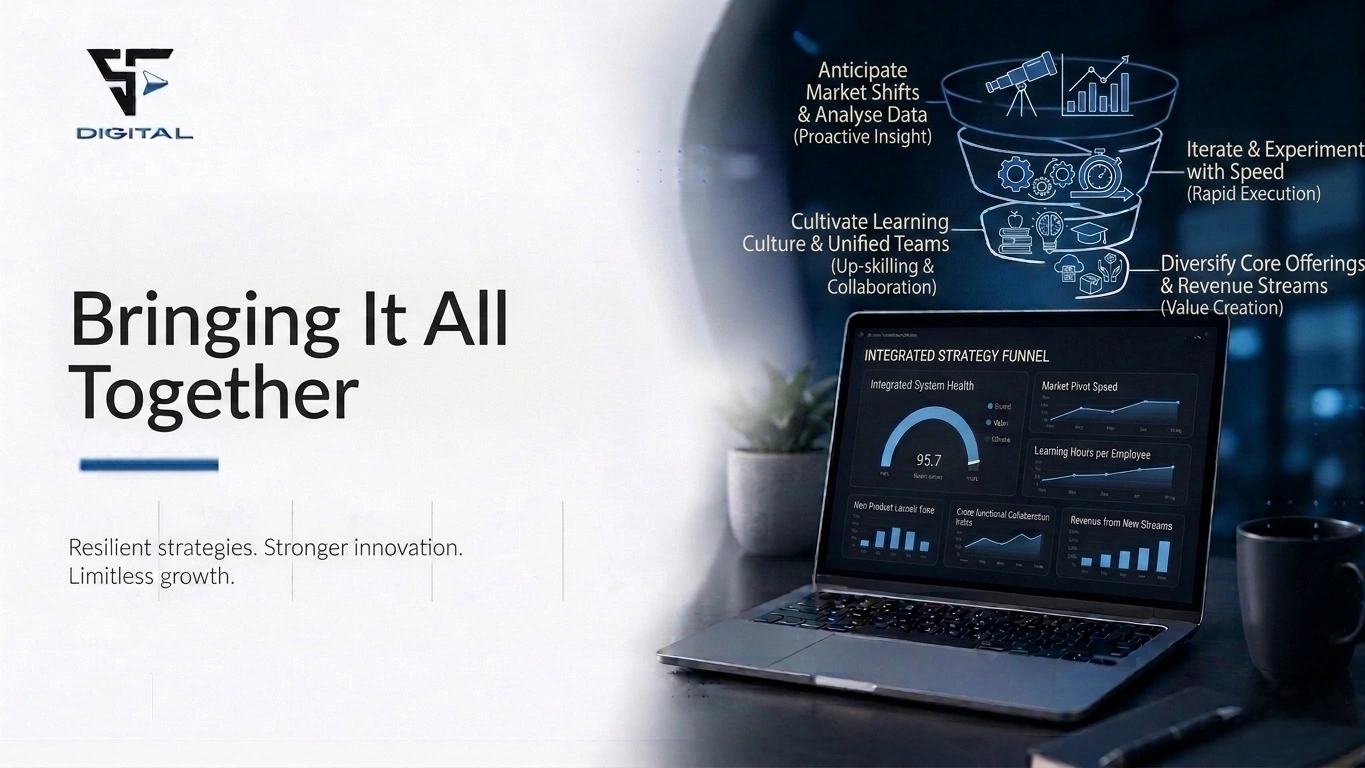
The future of digital marketing isn’t about chasing every shiny new tool or platform update. It’s about building a strong foundation — genuine customer relationships, ethical data practices, and a willingness to adapt — and then layering in the technologies that amplify that foundation. AI, personalization, video, and social commerce will all play major roles in the years ahead, but none of them replace the fundamentals: understanding your audience, delivering real value, and communicating with honesty.
The brands and marketers who approach these changes with curiosity, rather than resistance, won’t just keep up with the future of digital marketing. They’ll help shape it.